
During daytime hours, you may see police pulling drivers over to check their credentials. Generally speaking, the focus is on safe operation and maintenance of vehicles. However, later in the evening, you could find yourself pulled into a line of another kind. What happens if you’re arrested at a sobriety checkpoint?
More than likely, you’ve already heard the terms “reasonable suspicion” and “probable cause” as they relate to DWI charges. In order to pull you over for driving while intoxicated, the police need to have reasonable suspicion that you are actually drunk or high on drugs.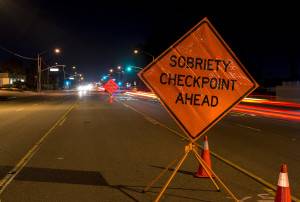
Most commonly, the manner in which you operate your motor vehicle acts as a reason to stop you. For example, if you’re observed swerving in and out of traffic and cruising through red lights, the police may suspect you of driving under the influence.
In the meantime, there’s also the issue of probable cause. Interesting enough, it might be hard for the prosecutor to justify a DWI stop if the police had no reasonable suspicion that you did something wrong.
While all that makes some sense, sobriety checkpoints are a different matter altogether. Most importantly, law enforcement authorities do not need to establish reasonable suspicion to pull you over at a DWI stop. Drivers are subject to stops based on a predesignated mathematical formula.
However, that’s not to say that the police have unlimited authority when it comes to sobriety checkpoints. In fact, an experienced DWI/DUI attorney always considers the legality of stops in preparing a defense against drunk driving charges.
Was the Sobriety Checkpoint Actually Legal?
It might come as a surprise to you. Law enforcement authorities need to follow particular legal requirements when setting up sobriety checkpoints. Failure to do so could actually invalidate the charges against you.
In the first place, you may question your constitutional rights when it comes to DWI checkpoints. However, the United States ruled on the issue in Michigan Dep’t of State Police v. Sitz.
According to the nation’s highest court, the concept of preventing drunk driving represents a safety concern. It is more important than the “degree of intrusion upon individual motorists who are briefly stopped.”
Meanwhile, you should know some of the expectations when it comes to sobriety checkpoints in New Jersey. They include:
• Commanding or supervising officers need to select the checkpoint location
• Data should support the selection for roadblocks
• Mathematical formulas must be set up in advance to designate what cars should be stopped. For example, every third driver – or every fourth one.
• Checkpoints must be marked with proper lighting and marked police vehicles.
• Law enforcement agencies need to identify the reason for the stops.
If failure to comply with any of these requirements raises any red flags, your attorney may be able to use them to question the legality of your motor vehicle stop.
Contact Us
The Law Offices of Beninato & Matrafajlo has decades of experience handling the defense of DWI cases. Whether your charges involved a sobriety checkpoint or not, we can help. Contact us for further information.


